Respiratory Care
Ventilators and anesthesia machines generate critical data every second: tidal volume, minute ventilation, PEEP, FiO₂, airway pressure. It drives every decision about a patient's respiratory status, yet it has mostly lived in manual charting or isolated systems, out of reach of the electronic medical record.
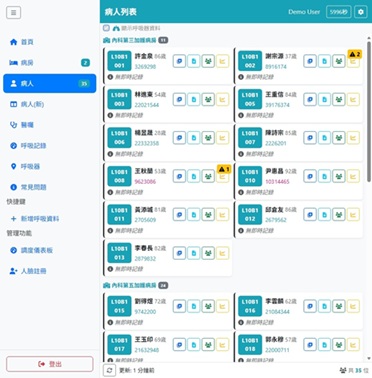
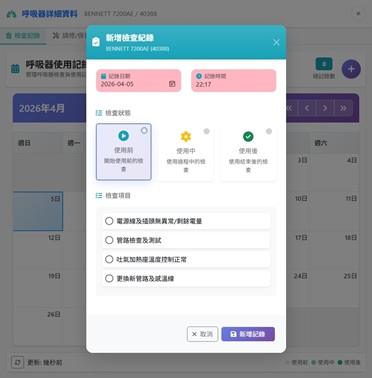
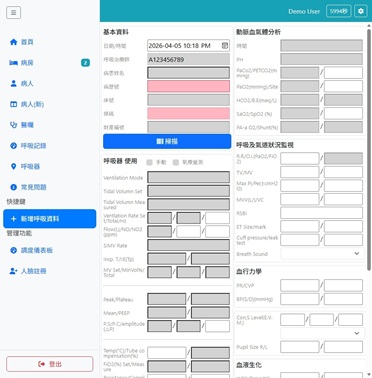
The limits of manual charting
Respiratory therapists transcribe ventilator settings every two hours. It eats into care time, and when a patient deteriorates there is no continuous record to look back on. Every ventilator brand has its own interface and data format, which makes integration harder still.
Real-time FHIR streaming
Once a DRIVE gateway is connected to the ventilator or anesthesia machine, it continuously streams data to the HIS and EMR as standard HL7 FHIR resources. Therapists focus on patients while the system charts automatically and builds trend views.
Real-time Ventilator Waveforms
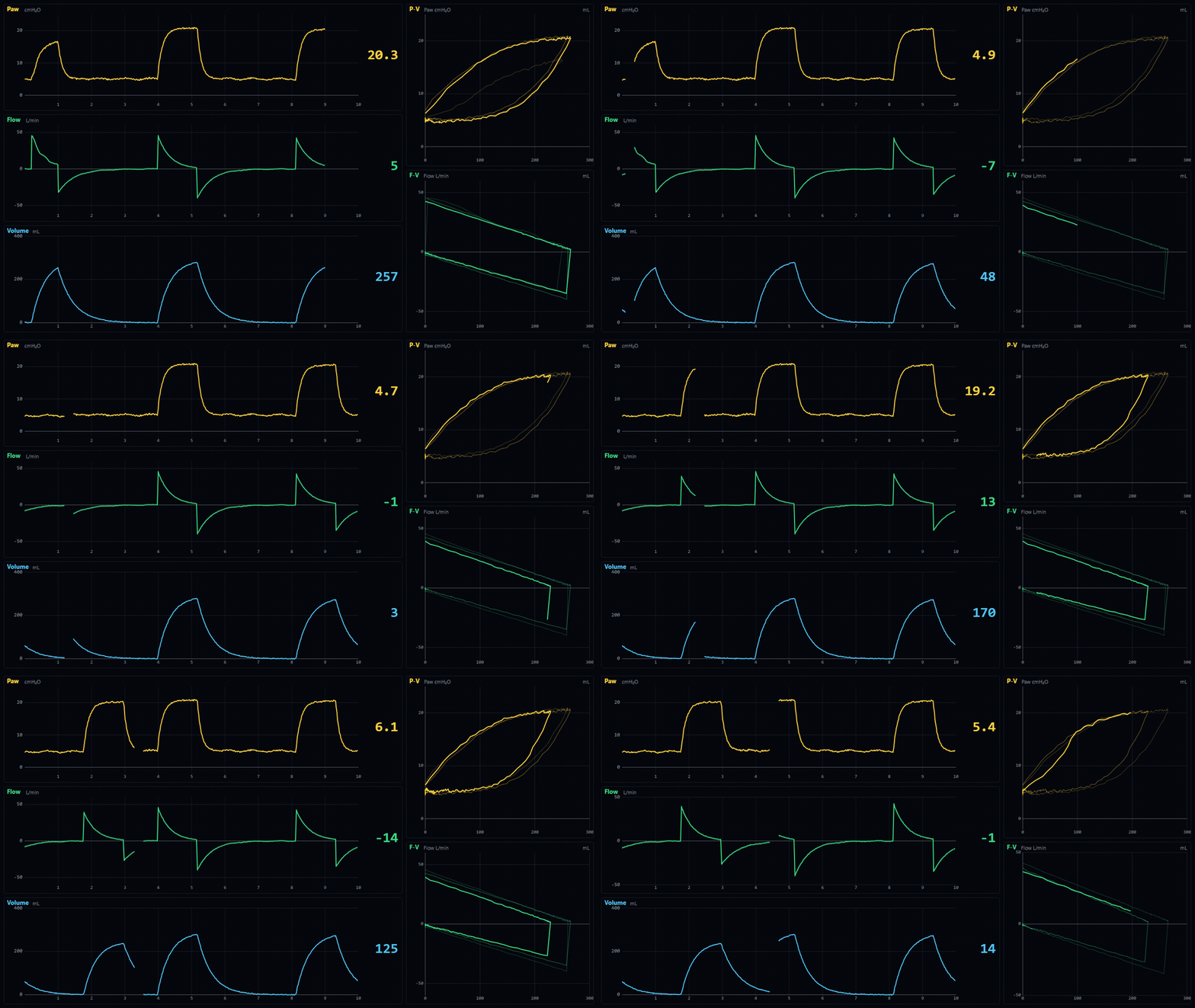
Paw, Flow and Volume at 50 samples per second, straight from the ventilator's RS-232 port to the ward and HIS screen. No more walking to the bedside to read the ventilator display.
50 Hz native protocol decoding
The gateway decodes pressure, flow and volume directly from the ventilator's serial protocol and pushes 50 samples per second over MQTT to the browser. No database in the path, about 1.5 s latency.
Sweep display, just like the ventilator
Canvas-rendered sweep waveforms with a fixed time axis and moving erase bar, read the same way as the ventilator screen. An auto-scaling Y axis keeps adult and neonatal traces equally readable.
P-V and F-V loops
Pressure-volume and flow-volume loops update in sync beside the traces, with the current breath solid and the previous two faded, so changes in compliance and resistance are obvious at a glance.
Embed in your HIS with one iframe
Any HIS or ward system can embed a live waveform with a single <iframe src="…/embed/wave/<MAC>"> tag. No login, no bed assignment. Waveform history is kept for 24 hours.
Ventilators with waveform support
Other models (e.g. PB840, V60, SLE, ST30, Astral) do not expose waveform data in their vendor protocols and are supported for parameter logging only.
Complete Ventilation Parameter Coverage
Ventilation
Tidal volume, minute ventilation, respiratory rate
Pressure
PEEP, peak airway pressure, mean airway pressure
Oxygenation
FiO₂, SpO₂, EtCO₂
Modes & Events
Ventilation mode changes, medication records
Supported Ventilators and Anesthesia Machines
Covering mainstream ICU, operating room, neonatal and general ward models, with the list growing continuously
Ventilators
Dräger
Evita · Evita2 · Evita4 · Evita XL · Evita V300 · Evita Infinity V500 · Savina · Savina 300 · Perseus A500 · Primus Family · Zeus IE · Oxylog 3000 plus · Carina · Babylog 8000 · Babylog VN500 · Babyleo TN500 · Isolette 8000 plus
Hamilton Medical
HAMILTON-G5 · Galileo · HAMILTON-C1
Getinge / Maquet
Servo-i · Servo-u · Servo-Air
GE Healthcare
Engstrom · CARESCAPE R860
Philips
V60
SLE
SLE 5000 · SLE 6000 (neonatal ventilators)
Nihon Kohden
NKV-330 · NKV-550
Anesthesia Machines
Dräger
Fabius · Primus · Apollo
GE / Ohmeda
CareStation 620 · Aisys · Avance CS² · Aestiva · Aespire
Maquet
FLOW-i
Don't see your model? Contact us to evaluate a custom integration.
Technical Advantages
Multi-vendor
Supports Dräger, Hamilton, Maquet, GE, Philips and other major brands.
Continuous Data Stream
Several parameter readings per minute, plus 50 Hz live waveforms on supported models, preserving the full trajectory of change.
FHIR Standard
Observation resources, interoperable with systems worldwide.
Large Language Model Integration
Automatic summaries of complex clinical documents help respiratory teams get to the key facts fast
Progress Note Summaries
Multi-day and multi-week progress notes condensed automatically, highlighting changes in condition, treatment response and key clinical events.
Operative Report Summaries
Key steps, intraoperative events and postoperative orders extracted from lengthy operative reports, ready for handover and cross-specialty review.
Handover Summaries
Key events across shifts compiled automatically, so the incoming team knows the current care priorities immediately.
Deployed on-premises. Data never leaves the hospital.
The language model can be deployed privately on your hospital's own servers with no Internet connection. Clinical data never leaves the hospital network, eliminating leakage risk at the source and meeting data protection and healthcare regulatory requirements.
Flexible Deployment Options
Choose the integration path that fits your existing IT architecture
DRIVE Gateway + Your Existing Systems
Purchase DRIVE gateways only and consume the standard HL7 FHIR output in your existing HIS, EMR or quality management system. Keep your current architecture and reduce rollout cost and retraining.
Best for: hospitals with mature information systems
DRIVE Gateway + eMicro Software
A complete turnkey solution: gateways paired with eMicro's respiratory data management and reporting system. Full parameter records, trend charts and clinical decision support out of the box.
Best for: departments that want a one-stop rollout
Configuration note: DRIVE gateways are deployed 1:1 with ventilators and anesthesia machines. One gateway per device; plan quantities based on your device count.
Deployments
Selected hospital deployments in Taiwan